
Culture and the Chair: How a Whisper Down the Arm Traces Back to the Barbershop
“The following article was written by artist Don Dixon and presented here in an AI-generated voice for accessibility.”
Listen to this article
There’s a moment in every barbershop where the clippers stop buzzing just long enough for someone to say, “Wait, let me tell you what really happened.” By the time that story makes it around the shop, it has picked up a joke here, lost a detail there, and grown a little larger than the truth. That’s the moment I wanted to capture in this piece.
About the piece
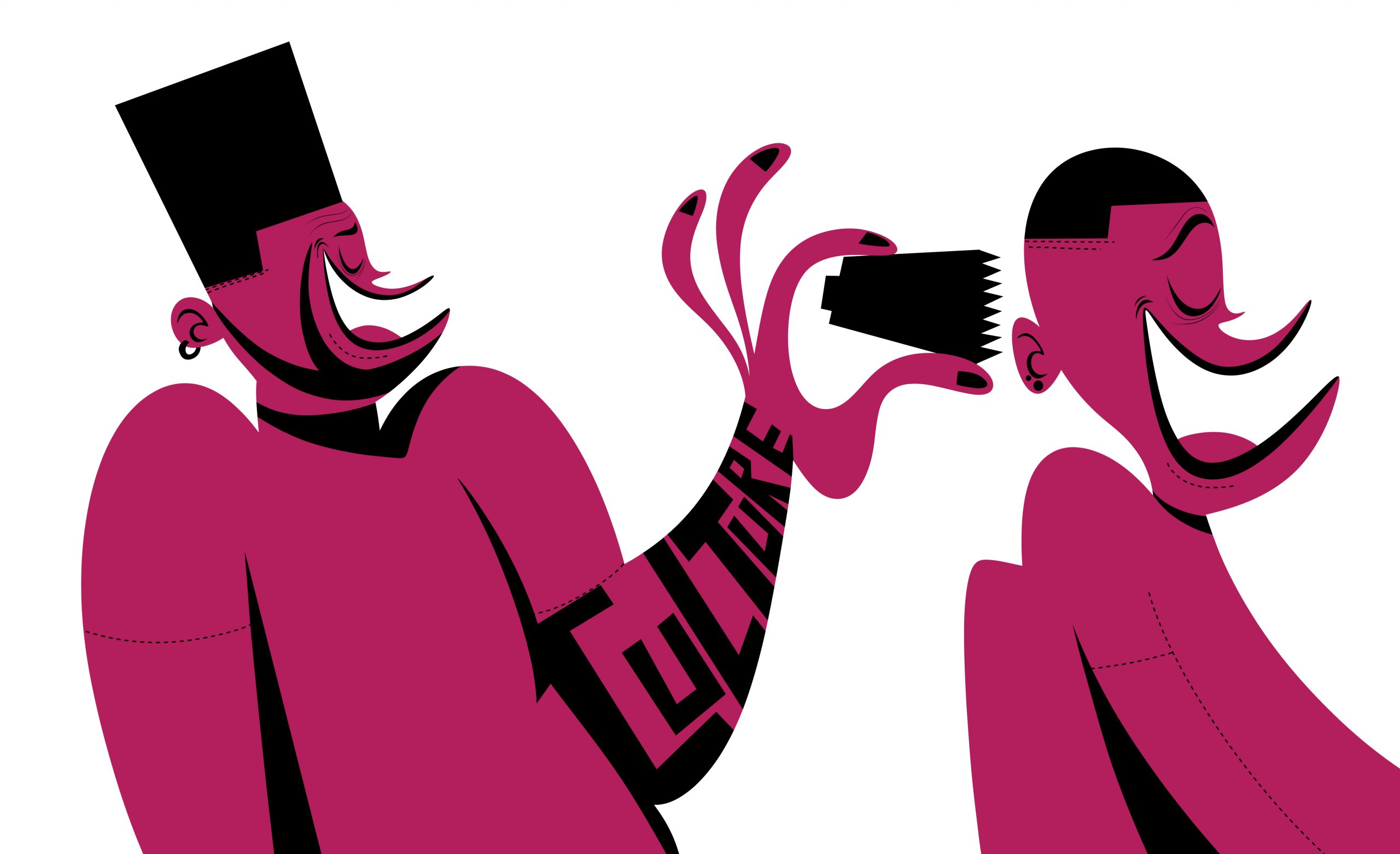
The image is built around a simple gesture: one figure leans in close, hand curled into a megaphone, and whispers straight into the next person’s ear. Down the arm, in blocky type, runs a single word: CULTURE. It’s a nod to the telephone game, the way something true and specific—a story, a style, a way of doing things—gets passed from person to person and comes out changed, sometimes distorted, sometimes improved, but never quite the same twice.
I wanted that motif to live inside a place where this actually happens every day: the Black barbershop.
About the artist
Don Dixon has spent more than two decades working across art, design, and animation. His credits include feature films such as The Book of Life, Free Birds, Rock Dog, Sherlock Gnomes, UglyDolls, and Scoob!, along with television, video game animation, and illustration work for Rolling Stone magazine.
He was born in North Carolina in 1978 and grew up in an unconventional household: his father built robots for companies like Atari and Worlds of Wonder, and Dixon and his sisters were raised alongside a seven-foot robot before the family relocated to California.
Of his own work, Dixon says, “I want to capture the fun side of art, the freedom of line, and energy and the imagination we all have in childhood.” His goal, as he puts it, is to “light the flame of imagination in people and businesses.”
The barbershop as a culture-keeper
Black barbershops trace back to the era of slavery, when enslaved Black men were valued for their grooming skills and often worked as barbers, sometimes for white patrons, in one of the few trades that offered any economic footing at all. After emancipation in the mid-1800s, Black barbers began opening their own shops to serve their own communities, which turned grooming into something bigger: a foothold for entrepreneurship, identity, and self-determination, according to the National Association of Barbers.
Culture and the Chair
Key dates in the history of Black hair and the Black barbershop
That growth wasn’t always welcomed. Many barber schools shut Black students out, so Black entrepreneurs built their own. In 1934, Henry Miller Morgan founded the Tyler Barber College in Tyler, Texas, the first national chain of barber colleges for African Americans; at its peak, nearly eighty percent of all Black barbers in the country trained through Tyler or one of its affiliated schools, per the National Association of Barbers. Some barbers turned that trade into serious wealth. Alonzo Herndon, born into slavery in 1858, built a barbershop business into the Atlanta Life Insurance Company and became one of the first Black millionaires in the United States.
But the real reason the barbershop matters culturally has less to do with the till and more to do with the chairs. The Smithsonian’s National Museum of African American History and Culture describes the barbershop as a place where “Black people could be vulnerable and talk about issues of importance in the community,” a rare room, historically, where that was possible without an outside audience, as noted in the museum’s piece on the community roles of the barbershop and beauty salon. Chess games, card games, dominoes, arguments about politics and neighborhood news all happened in the same breath as a haircut. Film has picked up on this for decades, from Coming to America to Malcolm X to Barbershop, because the shop has always doubled as a kind of unofficial town hall. That’s the whisper in my piece, made literal. A barbershop is where culture gets passed hand to hand, chair to chair, in a story someone tells while the fade gets lined up.
Hair as language
If the barbershop is where culture gets talked about, hair is often what’s being talked about, because Black hair has never just been hair. In ancient African societies, hairstyle communicated marital status, age, religion, wealth, and social rank; styling hair was itself a spiritual practice and a family ritual, according to Odele Beauty’s rundown of Black hair history.
That meaning survived the worst attempts to erase it. Enslavers shaved the heads of captured Africans as a first act of stripping identity, and Louisiana’s 1786 Tignon Law forced free Black women to cover their hair in public specifically to mark them as lesser; women responded by decorating their head wraps with jewels and vivid fabric, turning a restriction into a style, per the same Odele Beauty history. During slavery, some enslaved people reportedly braided escape routes into their hairstyles and hid seeds or gold within the plaits, using hair as a message no one else could read.
That thread runs straight into the twentieth century. Ebony magazine’s June 1966 issue on “The Natural Look” helped mark a turn toward the Afro, which the Smithsonian notes became a symbol of the Black Power and “Black is Beautiful” movements, worn by figures such as Angela Davis and Nina Simone as a rejection of Eurocentric beauty standards, as described in the museum’s feature Strands of Inspiration. Even now, the conversation isn’t finished: a 2020 Duke University study found Black women with natural hairstyles were rated as less professional and less likely to be recommended for a job interview than those with straightened hair, part of the pattern the CROWN Act (passed in twenty-three states as of 2023) exists to address by banning hair-based discrimination.
Hair, in other words, has always carried a message, and the barbershop has always been one of the rooms where that message gets discussed, defended, and passed on.
Where the piece and the chair meet
Put those two histories together and the megaphone hand in my piece stops being just a design choice. It’s the shape of what actually happens in a barbershop: someone leans in, tells you about a new line-up style, a piece of neighborhood news, a joke about your fade, a hard truth about the world outside. It gets repeated down the chairs, embellished, corrected, argued over, and by the end of the day it belongs to everyone who was there. That’s culture on the move, and the barbershop has been one of its steadiest engines for generations.
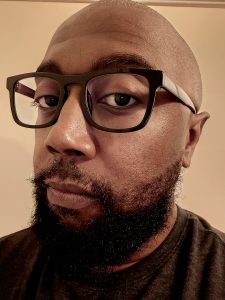
Artist Don Dixon is on a path to becoming one of the greats, creating meaningful, impactful work that makes a statement on society and the human condition.
Sources
The History of Black Barbershops — National Association of Barbers
The Community Roles of the Barber Shop and Beauty Salon — National Museum of African American History and Culture
Strands of Inspiration — National Museum of African American History and Culture
Black Hair History & Facts — Odele Beauty
Don Dixon — Artist Biography, Scrib Creative

I love the Barbershop ❤️